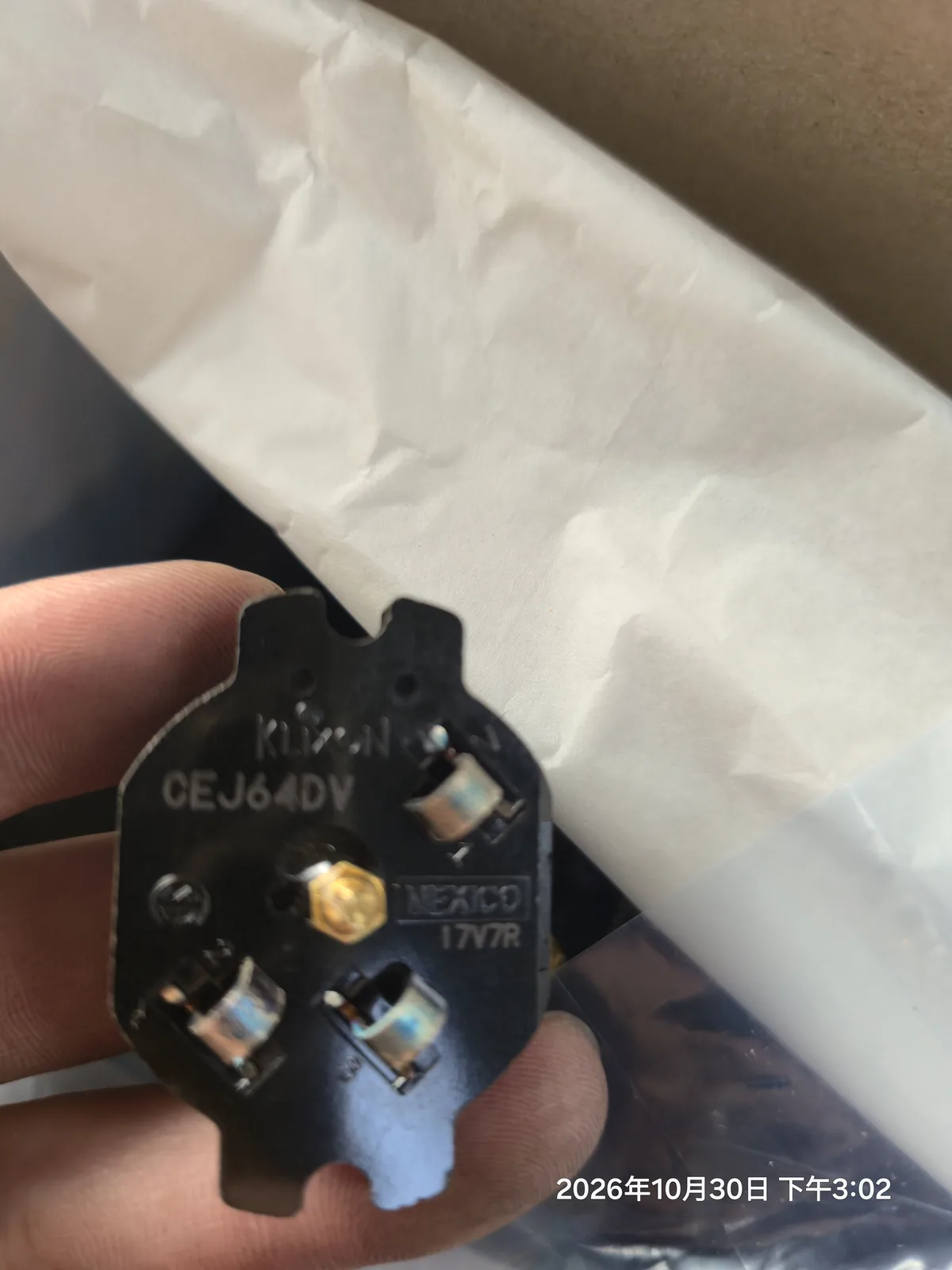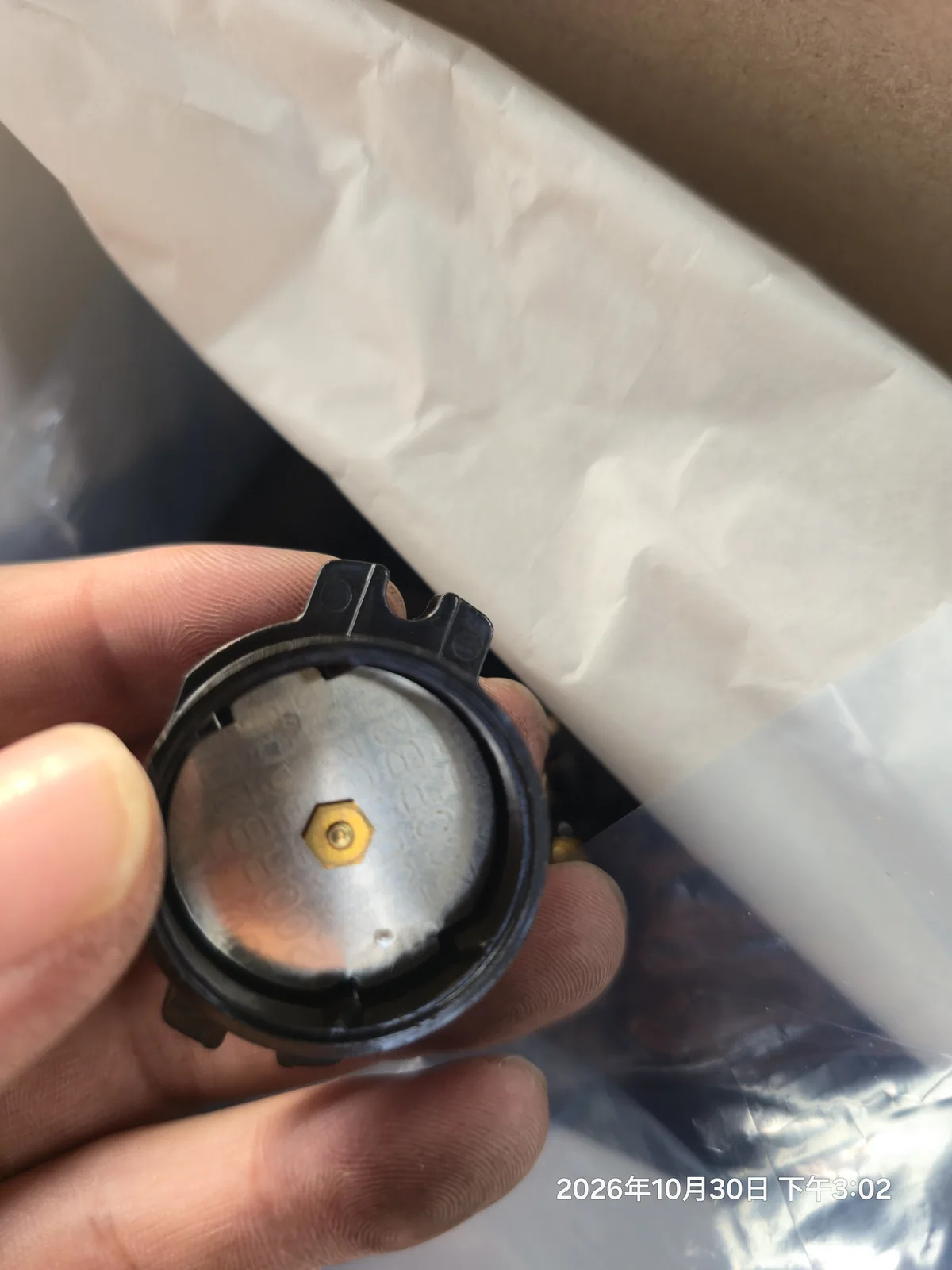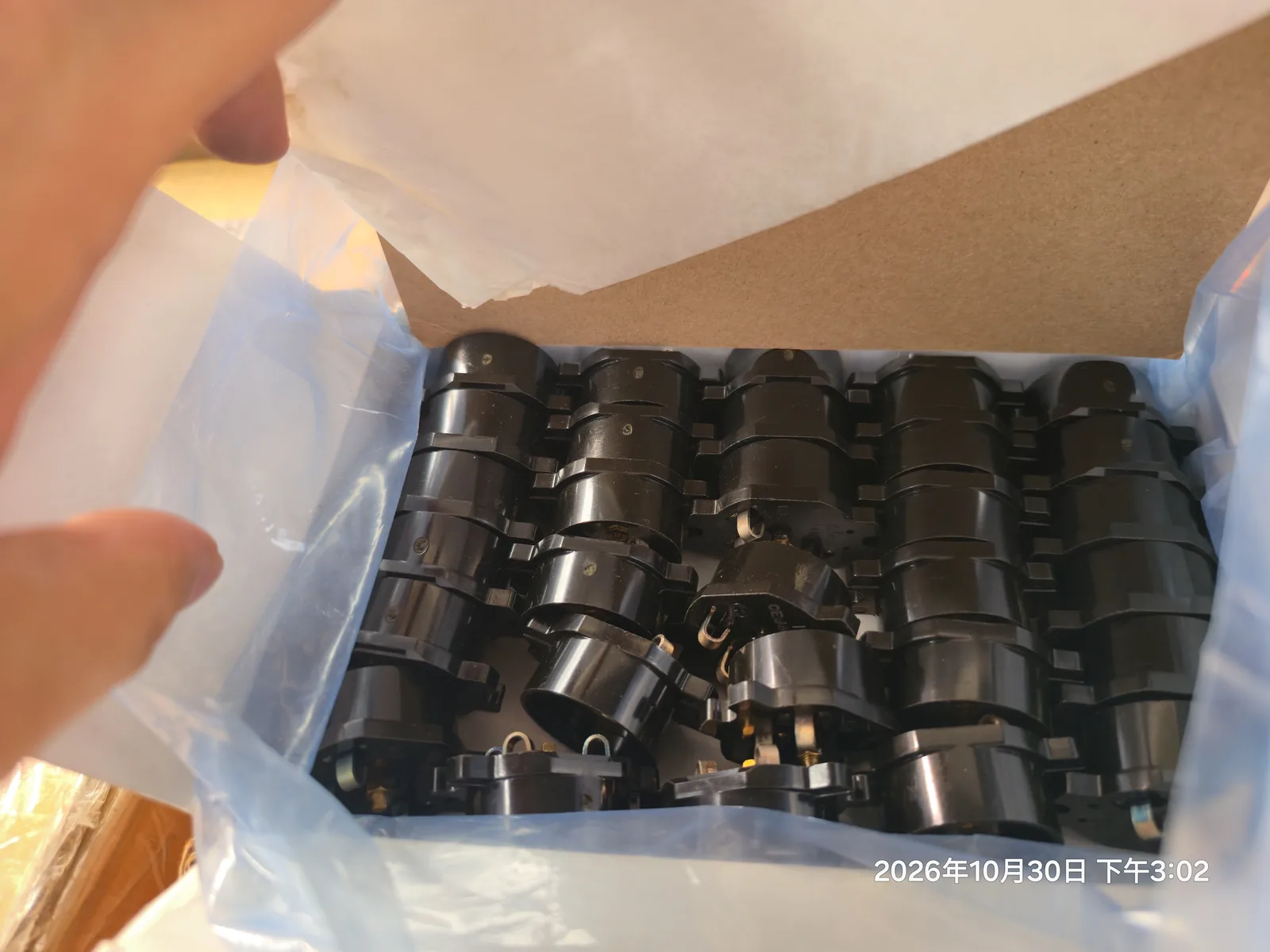
CEJ-64-DV is the Klixon motor protector identified by the compact CEJ64DV marking in the photographs. This listing includes views of both faces and a group photograph. Condition on request. The useful buying question is whether the offered pieces can be tied to the requested DV configuration, especially when they are not being evaluated from a sealed manufacturer carton.
Ask for a clear photo of an offered unit showing the complete mark. A group view can show how pieces are presented, but it does not verify the marking on every item in that view. If the order requires an exact Klixon DV motor protector, tell the supplier whether a representative marking image is sufficient or whether your receiving procedure requires checks on more pieces. Do not assume the pictured pieces, the offered pieces and the pieces delivered are the same without supporting evidence.
Keep CEJ64DV as the visible marking and CEJ-64-DV as the ordering reference. Use the approved equipment record to settle any discrepancy between them or between an offered mark and the original part. Preserve the number 64 and the letters DV together. Do not treat a listing for an EM or ALN version as equivalent just because the body is black and the terminal face looks similar. Ask for the complete proposed alternate on a separate line.
A sample can answer a narrow question before the buyer commits to a larger quantity. For example, a photograph can help read the part mark, while a physical sample can allow a reviewer to compare the orientation of the housing and terminal features with an approved reference. The two faces of the Klixon DV motor protector are shown for this purpose. They are not a specification for contact function, a wiring diagram or an electrical acceptance result.
Write the scope on the sample request. If it is for physical identification only, do not describe it as qualification for installation. If the buyer also needs documentation on calibration or reset behavior, identify which exact reference and equipment configuration that documentation must address. Sensata's general phenolic protector literature covers different configurations; a family description is not sufficient to assign an opening temperature or a reset behavior to CEJ-64-DV.
For a loose lot motor protector order, give the supplier any marking, segregation and packing requirements that will be checked at receipt. If different offered lots must not be mixed, make that a quote condition and ask what identifying information can be retained for each group. The photographed group is not a current inventory count. Ask the supplier to confirm the actual offered quantity, condition and packing rather than using the number of visible units as the basis for an order.
When the buyer is considering a balance after receiving a sample, ask whether the balance is tied to the same offered material or needs a new identity check. A quote for a loose lot motor protector can state what applies to the sample without necessarily describing the entire balance. Record how changes to the offered lot will be communicated. If the supplier cannot provide the evidence your process requires, keep the purchase under review rather than relying on the earlier sample photo.
Give the receiving team the full ordering reference, the approved equipment record and the offered marking image. State whether the review is limited to identification or whether it includes separate checks against an approved procedure. If a Klixon DV motor protector arrives with a different mark, keep it apart from accepted pieces and have the responsible buyer resolve the exception. Do not file an unreadable part under the family name just to complete an inventory transaction.
If parts are allocated to more than one repair, keep the approved reference with each allocation. This is especially useful when the outer packing will not stay with the individual pieces. A receiving note should say what was actually observed and which questions remain open. It should not imply that an electrical test was performed when the work was limited to comparing marks and visible features. Keep any installation or functional review under the equipment owner's approved process.
No. Use it as context, then obtain the marking evidence required for the offered quantity. Do not use the photo to determine current availability.
No. A sample only answers the checks agreed for it. A different part number or a different application needs review against the approved equipment documentation.
Use Request a Quote to send your quantity, delivery destination and the evidence needed to evaluate the offer. State if a substitute is not permitted.
Explore premium ICs, sensors, and power controls to support your advanced technical requirements.